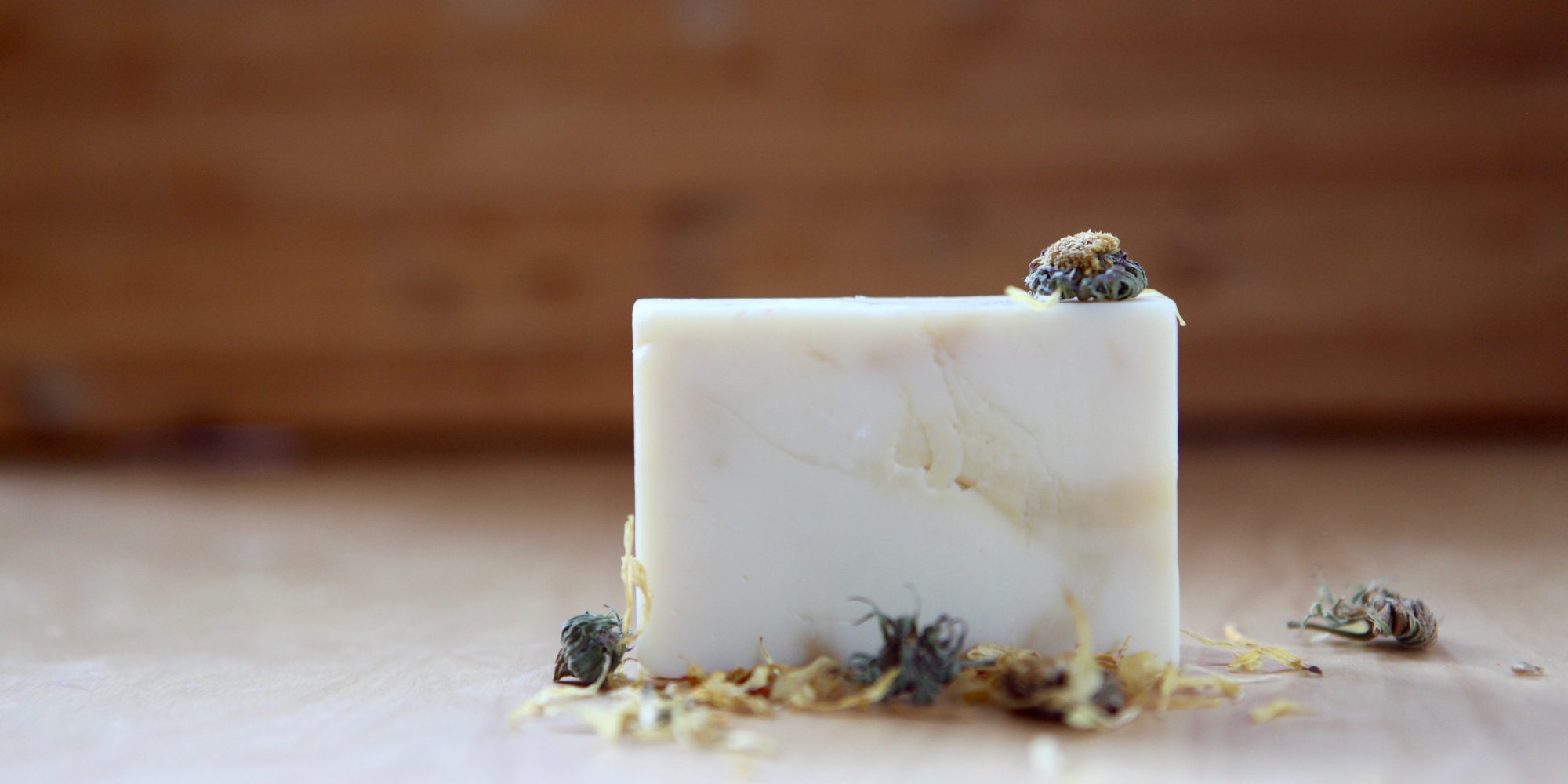
True Castile 100% Olive Oil Soap (Body Bar Base Recipe #1)

I’m not going go on and on on my “soapbox” (pun intended, haha) about true Castile soap and what is considered modern Castile soap… but always check the label on anything called “Castile soap” as it is often made as a combination of olive and coconut nowadays. I get it in a way, coconut oil adds a shorter cure time, higher lather and makes for a harder bar (again, in a shorter time span)… so a bit of a soapmaker’s dream in terms of running a business, as you can understand. BUT with the growing population that is sensitive or allergic to coconut & palm, alongside those who are seeing more and more the ecological impact of cheap coconut & palm sourcing, you will be happy to know that the original recipe and old school Castile soap (named after its origin of Castile, Spain) is 100% OLIVE OIL. To get geekier on you for a moment: Castile Soap is 100% Olive oil, Bastille Soap is 95% Olive oil and 5% a different oil of choice, and all other soap, is…. soap :). The biggest thing about 100% olive oil soap (or actually all high olive oil soaps) is patience. Olive Oils soaps need to be cured for at least 3-6 months, compared to soaps containing coconut oil that only need to cure 6-8 weeks to cure. So patience and ahead of time planning of your soaping needs is key. So let’s get right to it!

The Recipe (32oz(2lb) batch = approximately 9 bars/loaf mold):

Lye: 4.12oz

water (distilled or purified is best): 10oz (no more than 11oz)

Olive Oil: 32oz

Yes- those are literally the only ingredients!! I hope you are now feeling less intimidated about this :). From this one recipe you can create an huge variety of recipes when adding a variety of essential oils, infusing your olive oil with herbs ahead of time, and additives like clays, etc.

For notes and instructions, see my Basic Supplies and Resources: https://truelovesoap.com/basic-supplies-and-resources/ and Basic Soap Making Instruction pages: https://truelovesoap.com/basic-soap-making-instructions

A Few Variations/Ideas for this Recipe

Activated Charcoal: Add 2-4 tsps of activated charcoal (make sure to get activated charcoal that is made from bamboo, NOT coconut shells, as it often is) into your water before adding the lye. Then proceed as usual with the basic soap making steps. A great bar for oily/acne prone skin without stripping. Adding in tea tree is also great for oilier, acne prone skin- just hand stir in 1.5oz of Tea Tree essential oil after blending the oils and lye to a trace, then pour the batch into your soap mold.

“Bug Off” Bar (for healing bug bites): After blending the olive oil & lye to a trace, stir in (with a silicone spoon) .75oz Lavender essential oil, .75oz Tea Tree essential oil, .5oz Peppermint essential oil. Then pour into mold as usual. This particular essential oil combination is great for healing bug bites…. you could use a combination of lemon eucalyptus & lemongrass for a daily bar that could help some during mosquito season.

Lemon Balm & Catnip: About 6 weeks in advance, fill a large glass jar (or more than one smaller glass jar) at least 1/3 full of dried lemon balm and catnip herb- then pour olive oil over to fill the jar completely. Ideally place jar in a window and shake every few days or so. Once ready to make this bar in about 6 weeks, pour the infused oil through a fine mesh strainer into your pot when you weigh out your olive oil. Proceed with the basic soap making steps- after blending the lye into the infused oils to a trace, hand stir in with a silicone spoon .5oz palmarosa essential oil, .5oz lemon essential oil, .25oz lemongrass essential oil, .25oz bergamot essential oil. Pour into mold. This is a bar that is healing & gentle.

Pure & Gentle: replace 2-4oz of water with a plain, whole milk yogurt (I use white mountain Bulgarian yogurt). Soap as usual. After blending the oil & lye to a trace, hand stir in with a silicone spoon 1.5oz lavender essential oil. Pour into mold. This is a very gentle bar, great for everyone, including babies, and the lavender scent will fade some, leaving a very light aroma when using. If you would like your lavender to stay a little stronger, replace .25oz of lavender with patchouli essential oil. The patchouli scent will not be noticeable in the cured bar, but helps the lavender scent to “stick”, so to speak. Another nice addition to this bar is to infuse lavender flowers in your olive oil ahead of time and use instead of plain olive oil (6weeks ahead). I debated on wether to add this recipe or not to this particular list. I make this bar as a hot process bar, which I have not added directions for at this point. But this could be made with the cold process method with good results.

Sunshine Soap: Stir in 1-2tbsp of lemon peel powder and 1tsp of yellow oxide pigment to the water before adding the lye. Soap make as usual. After blending the oil & lye to a trace, hand stir in with a silicone spoon .75oz lemon essential oil and .75oz orange essential oil. Pour into mold. Good for normal to oily skin, balancing and cleansing.

Sweet Dreams: About 6 weeks in advance, fill a large glass jar (or a couple of smaller ones) around 1/3 full of dried passionflower herb, then pour olive oil over the herbs until the jar is full. Ideally, place in a windowsill and shake every couple of days. Once infused, strain out the passionflower herb with a fine mesh strainer when weighing out your oil for soap making. Soap make as usual. Once oils and lye have been blended to trace, hand stir in with a silicone spoon .75oz lavender essential oil and .75oz spearmint essential oil. Pour into mold. This bar is both skin soothing and emotional soothing.

Rose Clay Castile: Stir in 2 tsps of rose clay to the water before adding the lye. Soap make as usual. After blending the oil & lye to trace, hand stir in with silicone spoon .5oz palmarosa essential oil, .5oz litsea essential oil, and .5oz bergamot essential oil. Pour into mold. Also great for normal to oil skin. Rose clay is a little less absorbent than activated charcoal, but is great for a little deeper clean/skin balance for oilier skin but does just as well with “normal” skin.

Or: Think of this base recipe as a blank canvas and create the bar combination that is perfect for you!

Castile Bar Swirl Instructions and Recipes

Swirls can be created with any recipe, but I’ll use the couple that I like to make with the Castile soap recipe as an example of how to create it- I have 2-3 variations of the 100% olive oil soap recipe (Base Recipe #1) that I like to create with a swirl design. I figure these are slightly more complicated, so I separated these into their own post. These as just a couple of my personal recipes, but once again, there are so many variations you can create for yourself. Any variety of colors and clays, etc- there are a million different possibilities! -Creating designs is where you can get super artistic and fun, if you want.

For notes and instructions, see my Basic Supplies and Resources: https://truelovesoap.com/basic-supplies-and-resources/ and Basic Soap Making Instruction pages: https://truelovesoap.com/basic-soap-making-instructions

The basic process with creating a swirl design in a soap is this: Blend your lye & oils to a thin trace, then add the essential oils. In another container, separate out about 1/3 or a little less of your soap batter. In the small container of soap batter mix in the clay, colorant, powder, etc- whatever it is that is creating the contrasting swirl pattern. Hand stir in gently. Do the same with your larger container if using a color. Pour the larger container of soap until mold is around 2/3 full. Then slowly & gently pour the contrasting color in along one side of the batter in the mold. Sometimes, if all the batter is still super thin, it’s easier to pour off on an object, like a spatula into the mold, so that it is doesn’t splatter all through the soap batter that’s already in the mold instead of being able to create a swirl. Then take a swirl tool, or a chopstick, spoon, or a clean wire hanger bent in half to dip through to the bottom of the soap mold starting on the side the swirl batter was poured on, move horizontally across the mold to the other side. Repeat until the length of the mold has been covered with the tool. Go through each section once, without repeating unless you know you missed a section, otherwise you might mix the 2 soap batters together instead of swirling. Sometimes “mistakes” create really pretty results- so don’t worry about it and have fun! It’ll get much easier the second time around :).

Below is an informative video on the spoon swirl technique that is very beginner friendly https://www.youtube.com/watch?v=2FA1ZWm36Wo

https://www.youtube.com/watch?v=1zSxMJzB4WY

Calendula Rose: 6wks in advance, infuse the olive oil for this recipe with calendula flowers, rose petals, and rose hips (optional). Bring oils and lye to trace and hand stir in .75oz geranium, .5oz ylang ylang, and .25oz lemongrass essential oils. Separate out approx 1/3 (I eyeball this, I don’t use an exact measurement). Hand stir in 1-2 tsps of rose clay. Pour the larger batch of soap into the mold, leaving just a small amount still in the pot. Pour the rose clay soap batter gently on top, then swirl with your chosen technique. Gently pour the final amount of the original, uncolored soap batter on the top and with a chopstick or edge of spoon, swirl just the very top portion of the soap in the mold (this creates a more decorative top to the batch). OR, skip the decorative top aspect and just pour all of the uncolored soap batter in first, then the rose clay portion and swirl- either ends up looking pretty :).

Peppermint Swirl: Bring oils and lye to trace and hand stir in 1.5 oz peppermint essential oil. Separate out approx 1/3 (I eyeball this, I don’t use an exact measurement). Hand stir in 1-2 tsp of rose clay or for a true red contrast, use 1tsp red pigment/soap colorant instead or in addition to. Pour the larger batch of soap into the mold, leaving just a small amount still in the pot. Pour the pigmented soap batter gently on top, then swirl with your chosen technique. Gently pour the final amount of the original, uncolored soap batter on the top and with a chopstick or edge of spoon, swirl just the very top portion of the soap in the mold (this creates a more decorative top to the batch). OR, skip the decorative top aspect and just pour all of the uncolored soap batter in first, then the pigmented portion and swirl- either ends up looking pretty. Sprinkle or swirl in snowflake mica on the top for a festive holiday look.

Sunshine Soap: I have a version of this soap in my other olive oil recipe post that doesn’t have a swirl, but I have make this one with a swirl simply by adding yellow oxide pigment to a portion of the soap instead of the whole batch for a more decorative bar.

Bring oils and lye to trace and hand stir in 1-2tbls of lemon peel powder, then stir in .75 oz lemon and .75oz orange essential oil. Separate out approx 1/3 (I eyeball this, I don’t use an exact measurement). Hand stir in 1tsp of yellow oxide pigment. Pour the larger batch of soap into the mold. Pour the pigmented soap batter gently on top, then swirl with your chosen technique. Decorated the top of the bar as desired- I often sprinkle calendula flowers along one side of the batch.

Bastille Bar (Body Bar Base Recipe #2)

Bastille soap is classically defined as a bar that is 95% olive oil and 5% of another oil. It’s a nice recipe combination as it contains all the awesomeness of an olive oil bar with a touch of other properties that can enhance the bar. There are many oils that aren’t meant to be used in a high percentage in soap because they can change the physicality of the bar too much (making it too soft, or too hard so that it cracks, etc.), but are perfect in small amounts. I tend to create Bastille bars with castor oil, as it adds an emollient and more bubbly quality to the bar or with hemp oil for its highly nutritive and healing properties. Below are both recipes- the soap making steps for either is the same.

Bastille Soap with Castor Oil (2lb/32oz batch):

Lye: 4.11oz

water (distilled or purified is best): 9-11oz

Castor Oil: 1.60oz

Olive Oil: 30.40oz

Bastille Soap with Hemp Oil (2lb/32oz batch):

Lye: 4.12oz

water (distilled or purified is best): 9-11oz

Hemp Oil: 1.60oz

Olive Oil: 30.40oz

Once you’ve made the Castile Soap, this should be super easy. It’s essentially the same, just with an additional oil. For notes and instructions, see my Basic Supplies and Resources: https://truelovesoap.com/basic-supplies-and-resources/ and Basic Soap Making Instruction pages: https://truelovesoap.com/basic-soap-making-instructions

A Few Bastille Bar Variations/Ideas for this Recipe

Activated Charcoal & Tea Tree: Add 2-4 tsps of activated charcoal (make sure to get activated charcoal that is made from bamboo, NOT coconut shells, as it often is) into your water before adding the lye. Blend the lye water and oils to trace, then hand stir in 1.5oz of tea tree essential oil. Pour into mold. A great bar for oily/acne prone skin without stripping.

Antique Roses and Honey: 6 weeks in advance, infuse the olive oil for this recipe with rose petals and rose hips, by filling a large jar or jars approx. 1/3 with herbs and fill the jar with olive oil and cap jar tightly. Let sit for 6 weeks, shaking the jar weekly. When ready to make your soap, start by adding 2tbsp of rose clay to the water before adding the lye. Then blend your lye and oils to trace. Hand stir

Cold Season Immunity Bar: A great winter bar inspired by an immunity boosting blend of essential oils. Add 2-3 tsps of turmeric to the water before mixing in the lye. Once lye and oils are blended to a trace, hand stir in .25oz clove, .25oz cinnamon, .35oz lemon, .35oz eucalyptus, and .35oz rosemary essential oils. Pour into mold. I like to garnish this bar with a little gold mica swirled into the top.

Lavender Oatmeal Goat Milk Bar: Replace the water with goat milk. Another option is to use powdered goat milk at the recommended ratio to the amount of distilled or purified water. Mix in your lye- note that lye mixed with any milk will turn an orangey color at first and stink initially. That will go away after a little bit, but happens with the initial chemical reaction. While waiting for your lye solution to cool down, grind 2-4 tbsp of oatmeal to a powder. Blend the lye milk and oils to trace, then hand stir in the ground oatmeal, .25oz Patchouli and 1.25oz Lavender essential oils. Pour into mold. As with the Pure & Gentle, the Patchouli oil acts as an agent that keeps the lavender scent from fading too much. I only smell the Patchouli initially as I mix the batch, but once the bar is cured, it’s the lavender scent that is registered.

Toasted Flax & Honey: 6 weeks in advance, infuse the olive oil for this recipe with chamomile flowers by filling a large jar or jars approx. 1/3 with herbs and fill the jar with olive oil and cap jar tightly. Let sit for 6 weeks, shaking the jar weekly. When read to make the soap, blend the lye water & oils to trace, then stir in 3-6 tbsps ground flax seed (depending on how much of a loofah quality you want your bars to have ) and 2 tbsp of honey. Pour into mold.

Turmeric & St. John’s Wort: 6 weeks in advance, infuse the olive oil for this recipe with St. John’s Wort flowers by filling a large jar or jars approx. 1/3 with herbs and fill the jar with olive oil and cap jar tightly. Let sit for 6 weeks, shaking the jar weekly. When ready to make soap, add 2-4tsp of ground turmeric to the water before adding in the lye. Soap make as usual and pour into mold. This makes a great facial bar for most skin types.

Or: Think of this base recipe as a blank canvas and create the bar combination that is perfect for you!

Camellia Oil & Cocoa Butter (Body Bar Basic Recipe #3)

This is one of the oil combinations I like to make the most- gentle and moisturizing, the addition of camellia oil and cocoa butter blend so well with the castor and olive, creating a highly emollient bar.

Green Tea & Cocoa Butter Bar (2lb/32oz batch):

Lye: 4.11oz

Water (distilled or purified is best): 9-11oz

Camellia Oil (Green Tea Seed Oil) 1.6 (5%)

Castor Oil: 3.2oz (10%)

Cocoa Butter: 3.2oz (10%)

Olive Oil: 24oz (75%)

For notes and instructions, see my Basic Supplies and Resources: https://truelovesoap.com/basic-supplies-and-resources/ and Basic Soap Making Instruction pages: https://truelovesoap.com/basic-soap-making-instructions

You will need to heat your oils a bit more in order to melt the cocoa butter, so allow for more cooling time for the oils.

A couple of variations to try

Rose Hips & Cocoa Butter Moisturizing Bar: 4-6 weeks in advance, infuse olive oil with rose hips and rose petals. Follow general soap making instructions. Once soap has reached trace, separate out approximately half the batter into another (heat safe) container. Into one of the containers, hand stir in 2 tbsp of rose clay, then alternate pouring into the mold with the plain soap batter. Swirl all around the mold once all is poured in- you can use a swirl tool (usually ordered through a soap supply site), a spoon or a chopstick. I make this as an essential oil free bar, but you can always add your own blend at 1.5oz/2lb soap batch.

Coffee & Goat Milk Bar: Brew a batch of strong coffee and measure out half strong coffee and half goat milk to replace the distilled water in the recipe. Allow to cool to room temperature or colder. Carefully stir in the lye, your coffee mixture might foam up a little bit when adding the lye- also make sure to have ventilation because it will stink at first when reacting with the lye. Follow general soap making instructions. Once soap has reached trace, quickly hand stir in a blend of .75oz cedarwood essential oil, .5oz clove essential oil and .25oz patchouli essential oil. Gently stir in and pour soap into mold right away. Patchouli will cause soap to start getting lumpy like tapioca pudding, or what is called “seizing”, the more you stir it. Sometimes it happens a little anyway- no worries, just get it into the mold. It won’t ruin your soap, just effects it cosmetically a little, especially when trying to create a special design. Note: for this bar I often like to replace half the olive oil amount with rice bran oil. They are interchangeable so doesn’t effect the lye ratio in the recipe, as changing out other oils usually would.

Fennel & Elderflower Bar: 4-6 weeks in advance, infuse olive oil with a mixture of fennel seeds and elderflowers. Follow general soap making instructions and pour into mold. I make this as an essential oil free bar, but you can always add your own blend at 1.5oz/2lb soap batch.

Or: Think of this base recipe as a blank canvas and create the bar combination that is perfect for you!

Olive and Castor Shampoo Bar (Shampoo Bar Base Recipe #1)

First up is a simple, 2 oil shampoo bar recipe made with olive and castor oil. Castor oil is a great oil to add to shampoo bars as it increases the sudsing and adds a nice highly viscous oil very rich in nutrients to the bar. Because of the very soft quality of castor oil, add only up to 15% in any given bar formulation as otherwise it can create a bar that is still too soft and mushy once cured.

Base Shampoo Bar Recipe #1 (32oz or 2lbs)

Lye: 3.96oz

Distilled or Purified Water: 9-11oz

Olive oil: 27.52oz (86%)

Castor oil: 4.48oz (14%)

For notes and instructions, see my Basic Supplies and Resources: https://truelovesoap.com/basic-supplies-and-resources/ and Basic Soap Making Instruction pages: https://truelovesoap.com/basic-soap-making-instructions

A Few Shampoo Bar Variations/Ideas for this Recipe

Honey Calendula Shampoo Bar: 4-6 weeks ahead of time, infuse your olive oil with calendula flowers. Follow general soap making instructions, once the soap batter has reached trace, hand stir in 2tbsp honey, then pour into mold(s). I used this recipe for my original honey calendula bar before I decided to add meadowfoam oil to it. It’s still one of my favorite bars- healing, gentle and great from head to toe. This recipe is unscented- you could always add up to 1.5oz essential oils of your choice. Note on using honey- make sure you are soap making at cooler temperatures- as in oils and lye are around 110 or less. The sugars in the honey will heat up in the soap batter, if soaping with hotter oil/lye temps, this can cause the soap batter to “volcano” out of the mold. It doesn’t literally explode out, but quite a bit will bubble up over the top and ruin your soap batch. Once my soap in in the mold, I like to drizzle a little extra honey over the top of the bars and gentle stir it into the top layer of the bars.

Goldenrod Citrus Shampoo Bar: 4-6 weeks ahead of time, infuse your olive oil with goldenrod flowers. Mix in 1-2 tbsp Brazilian yellow clay into your distilled water before adding the lye. Then follow general soap making instructions. Once the soap batter has reached trace, hand stir in .75 oz of lemon essential oil and .75oz orange essential oil, then 2-4 tbsp shakikai powder. Pour into mold(s).

Lavender Tea Tree Shampoo Bar: 4-6 weeks ahead of time, infuse your olive oil with comfrey leaf. Follow general soap making instructions. Once the soap batter has reached trace, hand stir in .75oz lavender essential oil, .75oz tea tree essential oil and 2-4tbsp mix of yucca root powder and soapwort powder. Pour into mold(s).

Toasted Flax & Honey Extra Moisturizing Loofah Bar: 4-6 weeks ahead of time, infuse your olive oil with chamomile flowers. Follow general soap making instructions. Once soap batter has reached trace, hand stir in 2tbsp honey and 4-6tbsp ground flax seeds. See note on the honey calendula bar above on using honey in soap.

Himalayan Salt Goat Milk Bar: Not a shampoo bar, but a fantastic loofah bar. When adding a ton of salt to a body bar, it’s important to make it extra moisturizing, so a shampoo bar formula is best. Replace olive oil in recipe for rice bran oil (or use olive oil, I personally like rice bran for this one). Use goat milk instead of distilled water (remember that this will stink at first when adding the lye!- make sure to have good ventilation). Follow general soap making instructions. Once soap batter has reached trace, hand stir in .75oz spearmint essential oil and .75oz of eucalyptus essential oil. Then stir in 16oz (yes, that much is correct!) of Himalayan Salt. Spoon into mold(s)- this recipe will not pour like other soaps. Note: You will need an extra mold or molds for this recipe as the amount of salt will increase your bar amounts. I like to use individual 3oz rectangle molds for salt bars as cutting salt bars from a loaf can be tricky and crumbly.

Or: Think of this base recipe as a blank canvas and create the bar combination that is perfect for you!

Meadowfoam Shampoo Bar (Shampoo Bar Base Recipe #2)

This shampoo bar is a 3 oil bar made with meadowfoam oil, castor and olive. I love using meadowfoam oil- it is a thick oil almost alike in properties as jojoba oil, but as it comes of the seed of a flowering plant, it is completely unrelated in protein structures to tree nuts. Jojoba is a more tricky oil, it is technically not a tree nut, it is the seed of a bush, it is much more common those with tree nut allergies are also reactive to jojoba. Jojoba falls into a grey area, and meadowfoam seed oil is the perfect solution. It is moisturizing and coats the hair shaft, helping to keep it shiny and smooth without leaving a greasy feel. It is also a highly stable oil with a long shelf life, great for soap making. It’s benefits are great to skin as well- so great for an “everything bar” or as a highly emollient single oil for especially dry or aging skin.

Base Shampoo Bar Recipe #2 (32oz or 2lbs)

Lye: 3.93oz

Distilled or Purified Water: 9-11oz

Olive oil: 25.6oz (80%)

Castor oil: 4.48oz (14%)

Meadowfoam oil 1.92oz (6%)

For notes and instructions, see my Basic Supplies and Resources: https://truelovesoap.com/basic-supplies-and-resources/ and Basic Soap Making Instruction pages: https://truelovesoap.com/basic-soap-making-instructions

A Few Shampoo Bar Variations/Ideas for this Recipe

Honey Calendula Meadowfoam Shampoo Bar: 4-6 weeks ahead of time, infuse your olive oil with calendula flowers. Follow general soap making instructions, once the soap batter has reached trace, hand stir in 2tbsp honey, then pour into mold(s). Note on using honey- make sure you are soap making at cooler temperatures- as in oils and lye are around 110 or less. The sugars in the honey will heat up in the soap batter, if soaping with hotter oil/lye temps, this can cause the soap batter to “volcano” out of the mold. It doesn’t literally explode out, but quite a bit will bubble up over the top and ruin your soap batch. Once my soap in in the mold, I like to drizzle a little extra honey over the top of the bars and gentle stir it into the top layer of the bars.

Fresh Aloe Mint Shampoo Bar: replace the distilled water in the recipe with aloe vera juice or gel (just make sure there are no coconut based derivatives in the ingredients- sometimes this is in the tocopherol used as a preservative). I cut & scrape my own aloe vera plants for this, create a very this gel base and then thin with a little distilled water before mixing in the lye. The follow general soap making instructions. Once soap batter has reached trace, hand stir in .5oz peppermint essential oil, .5oz spearmint essential oil, .5oz eucalyptus essential oil and 4-6 tbsp of yucca root powder. Pour into mold(s).

Coffee Meadowfoam & Silk Shampoo Bar: Replace distilled water with strong brewed coffee and make sure it has completely cooled to room temperature or below before adding the lye (this will stink at first- make sure to have ventilation). Follow general soap making instructions. Once soap batter has reached trace or almost trace, stick blend in 1oz silk aminos powder, then hand stir in 1.25oz cedarwood essential oil and .25oz clove essential oil. Pour into mold(s).

Lavender Rose Meadowfoam Shampoo Bar: 4-6 weeks in advance, infuse olive oil with rose petals and rose hips. Follow general soap making instructions. Once soap batter has reached trace, hand stir in .75oz litsea essential oil, .5oz lavender essential oil, and .25 lemongrass essential oil. Pour into mold(s).

Or: Think of this base recipe as a blank canvas and create the bar combination that is perfect for you!

Hemp Shampoo Bar (Shampoo Bar Base Recipe #3)

Hemp oil is a really nice oil to add to bars, especially shampoo bars. Hemp oil absorbs into hair well, is highly nutritive, adds shine and moisture. The tricky thing about working with hemp oil is that it has a short shelf life- 3 month, 6 if stored in the fridge. You might want to use individual bar molds for this shampoo bar and halve the recipe (instead of a loaf mold) or store your bars in the fridge, as a 2lb batch (around 9 bars in a loaf) can take awhile to go through.

Hemp Shampoo Bar- Base Shampoo Bar Recipe #3 (32oz or 2lbs)

Lye: 3.97oz

Distilled or Purified Water: 9-11oz

Olive oil: 24.32oz (76%)

Castor oil: 4.48oz (14%)

Hemp oil 3.20oz (10%)

For notes and instructions, see my Basic Supplies and Resources: https://truelovesoap.com/basic-supplies-and-resources/ and Basic Soap Making Instruction pages: https://truelovesoap.com/basic-soap-making-instructions

A Few Shampoo Bar Variations/Ideas for this Recipe

Hemp, Honey & Silk Shampoo Bar: Replace 1-2oz of the distilled water with hydrolyzed silk protein. Follow general soap making instructions, once the soap batter has reached trace, hand stir in 2tbsp honey, then pour into mold(s). I make this bar unscented, but you can add an essential oil blend of your choice at 1.5oz/2lb soap batch. Note on using honey- make sure you are soap making at cooler temperatures- as in oils and lye are around 110 or less. The sugars in the honey will heat up in the soap batter, if soaping with hotter oil/lye temps, this can cause the soap batter to “volcano” out of the mold. It doesn’t literally explode out, but quite a bit will bubble up over the top and ruin your soap batch. Once my soap in in the mold, I like to drizzle a little extra honey over the top of the bars and gentle stir it into the top layer of the bars

Rosemary Mint Shampoo Bar: Replace plain distilled water with a very strong “tea” made with nettle leaves and stir in 1-2tsp spirulina powder once fully cooled to room temperature or colder. Stir in the lye and follow general soap making instructions. Once soap batter has reached trace, hand stir in a blend of .75oz rosemary essential oil and .75oz peppermint essential oil. Pour into mold(s)

Hemp, Sea Salt & Lime Bar: Follow general soap making instructions. Once soap batter has reached trace, hand stir 1.5oz lime essential oil. Then stir in 16oz sea salt. Pour or scoop into mold(s). Note: You will need an extra mold or molds for this recipe as the amount of salt will increase your bar amounts. I like to use individual 3oz rectangle molds for salt bars as cutting salt bars from a loaf can be tricky and crumbly.

Or: Think of this base recipe as a blank canvas and create the bar combination that is perfect for you!

Beeswax Bar (Body Bar Base Recipe #4)

Beeswax is nice addition to soap to enhance the skin protecting, soothing and hydrating qualities of the bar. Only a small amount is needed, otherwise the bar can crack while curing, or “drag” too much on the skin, not washing off well. Beeswax does decrease the sudsing capabilities of the bar some, which the castor oil in this recipe helps offset. You could increase the castor oil in the recipe to 15% instead of 10%, just make sure to use http://soapcalc.net/calc/SoapCalcWP.asp to calculate the amount of lye needed for the change (it will be a little bit less). My page on basic soap recipe formulation gives further instructions on this https://truelovesoap.com/soap-recipe-formulation-basics/ .

Beeswax Body Bar (2lb/32oz batch):

Lye: 4.11oz

Water (distilled or purified is best): 9-11oz

Beeswax 0.8oz (2.5%)

Castor Oil: 3.2oz (10%)

Olive Oil: 28oz (87.5%)

For notes and instructions, see my Basic Supplies and Resources: https://truelovesoap.com/basic-supplies-and-resources/ and Basic Soap Making Instruction pages: https://truelovesoap.com/basic-soap-making-instructions

You will need to heat your oils quite a bit more in order to melt the beeswax, so allow for more cooling time for the oils.

A couple of variations to try

Honey & Beeswax Bar: 4-6 weeks in advance, infuse olive oil with either chamomile flowers or calendula flowers (or both). Follow general soap making instructions. Once soap has reached trace, hand stir in 1-2tbsp kaolin clay (you can also add this to your distilled water before adding the lye if you want.) and a blend of 1oz lemon essential oil and .5oz bergamot essential oil. Lastly, hand stir in 2tbsp of honey. Pour into mold(s). Note on using honey- make sure you are soap making at cooler temperatures- as in oils and lye are around 110 or less. The sugars in the honey will heat up in the soap batter, if soaping with hotter oil/lye temps, this can cause the soap batter to “volcano” out of the mold. It doesn’t literally explode out, but quite a bit will bubble up over the top and ruin your soap batch. Once my soap in in the mold, I like to drizzle a little extra honey over the top of the bars and gentle stir it into the top layer of the bars.

Sunset Bar: Follow general soap making instructions. When soap has reached a light trace (fully blended, but closer to liquid than pudding), hand stir in a blend of .5oz lemon essential oil, .5oz orange essential oil, and .5oz bergamot essential oil. Then separate out the soap batter into 3 containers- in first container, stir in 1tsp of Brazillian yellow clay, in the second container, stir in 1tsp of madder root powder, and in the third container, stir in 1tsp of alkanet root powder. The soap batter is likely getting thicker at this point- pour or scoop the first container into the mold, if it’s thick, go ahead and scoop the second container into the mold. If the bottom layer is still thin, wait a little bit for it to set some. If the second or third container is still thin, hold a spatula over your mold and pour the soap batter so it runs off the spatula into the mold- that way it won’t break through the first layer as much. Once your second container is poured and set a little, scoop or pour (using the spatula again) on top of your second layer. If your soap batter was thick enough to scoop, gently tap the mold a bit so all the soap settles into the mold without air pockets.

Or: Think of this base recipe as a blank canvas and create the bar combination that is perfect for you!

Cocoa Butter Shampoo Bar (Shampoo Bar Base Recipe #4)

Cocoa Butter adds an extra rich moisturizing element that is great for drier hair.

Cocoa Butter Shampoo Bar (2lb/32oz batch):

Lye: 3.97oz

Water (distilled or purified is best): 9-11oz

Cocoa Butter: 3.2oz (10%)

Castor Oil: 4.48oz (14%)

Olive Oil: 24.32oz (76%)

For notes and instructions, see my Basic Supplies and Resources: https://truelovesoap.com/basic-supplies-and-resources/ and Basic Soap Making Instruction pages: https://truelovesoap.com/basic-soap-making-instructions

You will need to heat your oils a bit more in order to melt the cocoa butter, so allow for more cooling time for the oils.

A few variations to try

Cocoa Butter & Silk Shampoo Bar: Replace 1-2oz of distilled water with hydrolyzed silk aminos before adding the lye. Follow general soap making instructions. When soap has reached trace hand stir in a blend of .6oz spearmint essential oil, .5oz fir needle essential oil and .4 lemongrass essential oil. Pour into mold(s). Another option is to use powdered silk aminos instead of adding to the distilled water- add before the essential oils, sprinkle all around the soap batter so dry chunks of silk don’t form in the oil, then hand stir in.

Sage Oil & Tea Tree Shampoo Bar: 4-6 weeks in advance infuse olive oil with sage leaf. Follow general soap making instructions. Hand stir in 1.5oz of tea tree essential oil. Pour into mold(s).

Marshmallow & Dandelion Shampoo Bar: 4-6 weeks in advance infuse olive oil with a blend of marshmallow and dandelion root. Follow general soap making instructions. Add in 1.5oz essential oil blend if desired (I make this bar unscented).

Cambrian Clay & Himalayan Salt: Stir in 1-2 tbsp of Cambrian clay into distilled water before adding the lye. Follow general soap making instructions. Once soap has reached trace, hand stir in 16oz of Himalayan Salt. Scoop into mold(s), this batter will be quite thick once the salt is added, also good to have extra molds on hand as this also increases the volume of soap. Add in 1.5oz essential oil blend if desired (I make this bar unscented).

Or: Think of this base recipe as a blank canvas and create the bar combination that is perfect for you!

Hemp and Olive (Body Bar Base Recipe #5)

Hemp oil is extremely gentle and healing and a great addition to a bar for highly sensitive or reactive skin. Adding hemp oil at this amount makes for a softer bar overall, and you want to make sure to use the freshest hemp oil you can find- the shelf life is short (3 months, 6 in freezer)- make in small batches and store in the fridge if you can for longevity once the bars have cured. Adding in a small amount of rosemary oleoresin (an unscented natural preservative) can help quite a bit. Also honey acts as a natural preservative in increase the shelf life, and is a very healing additive as well. Most of my variations of this bar as unscented as many of the people that needed this bar combination the most couldn’t tolerate essential oils of any kind.

Hemp and Olive Bar- Base Body Bar Recipe #5 (32oz or 2lbs)

Lye: 4.13oz

Distilled or Purified Water: 9-11oz

Olive oil: 26.24oz (82%)

Hemp oil 5.76oz (18%)

For notes and instructions, see my Basic Supplies and Resources: https://truelovesoap.com/basic-supplies-and-resources/ and Basic Soap Making Instruction pages: https://truelovesoap.com/basic-soap-making-instructions

A Few Variations/Ideas for this Recipe

Woods Blend Bar: Follow general soap making instructions. Once soap has reached light trace (blended but very liquid still), blend in a 1tsp green mica & 1tbsp kelp powder. Then hand stir in a blend of .5oz fir needle essential oil, .6oz rosemary essential oil, and .4 oz peppermint essential oil. Pour into mold(s).

I also like to make this bar leaving out the green mica & fir needle oil essential oil and with a 50/50 blend of rosemary and peppermint essential oil. The rosemary in both these bars also helps to preserve them.

Hemp Oil & Goat Milk: Replace distilled water with goat milk- either fresh or a strong blended powder in distilled water. Follow general soap making instructions. Pour into mold(s).

Hemp, Honey & Milk: A variation of the bar above, I also make this one unscented so it is extra healing and gentle. Replace distilled water with fresh milk (cow or goat). Follow general soap making instructions. Once soap batter has reached trace, hand stir in 2tbs of honey. Pour into mold(s). Note on using honey- make sure you are soap making at cooler temperatures- as in oils and lye are around 110 or less. The sugars in the honey will heat up in the soap batter, if soaping with hotter oil/lye temps, this can cause the soap batter to “volcano” out of the mold. It doesn’t literally explode out, but quite a bit will bubble up over the top and ruin your soap batch. Once my soap in in the mold, I like to drizzle a little extra honey over the top of the bars and gentle stir it into the top layer of the bars.

Hemp, Honey & Calendula: Replace distilled water with a very strong calendula tea. To make it extra healing, infuse olive oil with calendula as well 4- 6 weeks in advance. Follow general soap making instructions. Pour into mold(s).

Or: Think of this base recipe as a blank canvas and create the bar combination that is perfect for you!